In Hamilton we see a lot of contractors surprised when their compaction effort fails. The material feels solid under the roller. But the lab tells a different story. The culprit is usually the soil's moisture content. Waikato's volcanic ash-derived soils are incredibly sensitive to water. Too dry and they stay fluffy. Too wet and they turn to sponge. That exact sensitivity is why a proper Proctor test matters. We run both Standard and Modified Proctor in our lab to nail the maximum dry density and optimum moisture for your fill. These aren't just numbers on a report. They're the targets your site team needs to hit every lift. Getting this right early prevents costly rework. It also keeps your CBR road design reliable, because CBR values depend entirely on achieving the right compaction state.
Maximum dry density isn't a theoretical goal. It's the physical limit of what that soil can achieve under that compactive effort. Anything less is wasted roller time.
Methodology applied in Hamilton
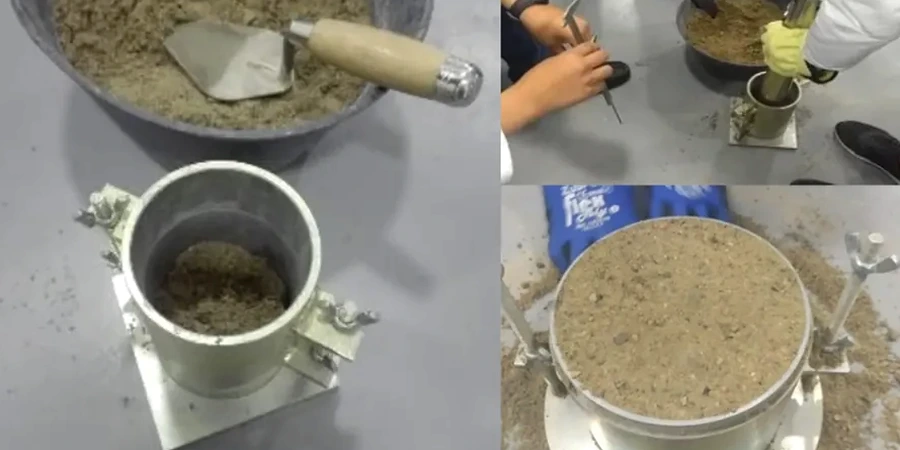
Typical technical challenges in Hamilton
A warehouse slab on Te Rapa Road failed two years after construction. The floor cracked in a grid pattern. Core samples showed the fill underneath was at 87% of Standard Proctor density. The spec required 95%. The contractor had relied on visual inspection and roller passes. No lab compaction curve was ever established. The moisture content was 6% above optimum. That fill was never going to compact. It was pumping under the roller and nobody noticed. The repair cost exceeded the original earthworks budget. Hamilton's wet winters make moisture control especially difficult. You need a target density that accounts for the material's natural water sensitivity. Without a Proctor curve, you're just guessing. With it, your QA team can run field density tests and know immediately if the lift passes or fails.
Our services
Our Hamilton laboratory provides compaction testing and complementary geotechnical services for earthworks projects.
Standard Proctor (2.5 kg)
Simulates light compaction effort. Used for trench backfill, landscaping, and subgrade under low-traffic pavements. Five-point moisture-density curve with full reporting.
Modified Proctor (4.5 kg)
Replicates heavy roller compaction. Required for structural fill under foundations, road basecourse, and airport pavements. Higher compactive effort matches modern site equipment.
Field Density Correlation
We pair lab Proctor curves with sand cone or nuclear gauge results from your site. Direct comparison against maximum dry density gives percentage compaction for QA records.
Common questions
What size sample do you need for a Proctor test in Hamilton?
We require about 25 kg of disturbed bulk sample in sealed bags. For gravelly soils with particles up to 37.5 mm, we may need up to 40 kg to run the test in a 152 mm diameter mould. The sample must retain its natural moisture. Deliver it to our Hamilton lab the same day it's excavated, or store it in an airtight container. If the sample dries out before testing, the compaction curve will be wrong.
How much does a Proctor test cost in Hamilton?
Which Proctor test should I use, Standard or Modified?
That depends on your fill's purpose. For structural fill under foundations, road sub-base, or any engineered fill, use Modified Proctor. It matches the compactive effort of modern heavy rollers. For landscaping, utility trench backfill, or temporary works, Standard Proctor is usually sufficient and more realistic. If your spec says 95% compaction, ask which Proctor reference the 95% applies to. That single detail changes the entire compaction target.