Hamilton sits roughly 40 meters above sea level on the banks of the Waikato River, and the soil profile here shifts fast. You can hit dense river gravels on one borehole and soft alluvial silt just 50 meters away. That is why we run grain size analysis on every project that touches foundation design. Knowing the full particle range, from gravel down to clay fraction, is not optional in Hamilton. It is the difference between a straightforward shallow footing and a costly over-excavation. Our lab runs combined sieve and hydrometer tests per NZGS guidelines, because the Waikato basin demands both. A standard sieve stack alone misses the silt and clay tail that controls drainage and shrink-swell behavior. We often pair this with atterberg limits when the fine content exceeds 12 percent, which happens frequently in the Te Rapa and Rototuna subdivisions.
A grain size curve is not just a report graph. It is the first honest conversation you have with the ground about how it will behave under load and water.
Methodology applied in Hamilton
Typical technical challenges in Hamilton
Compare a site in Hillcrest with one in Rotokauri and you are looking at two completely different gradation problems. Hillcrest sits on weathered Mangaokewa ignimbrite; the fines are silty and erodible, and the grain size curve often shows a gap-graded profile that complicates compaction control. Rotokauri, on the other hand, is deep alluvium with high clay content and poor internal drainage. We have seen projects where the grain size analysis from Rotokauri samples showed 60 percent passing the 75-micron sieve, and the contractor spent an extra three weeks on subgrade stabilisation. Without that data early in the design phase, the programme would have blown out. The risk in Hamilton is not finding bad soil. It is building on it without knowing the particle distribution, because that distribution controls everything: permeability, strength, sensitivity to moisture, and even how the soil will react during a seismic event. The NZGS soil description guidelines tie directly to these numbers.
Our services
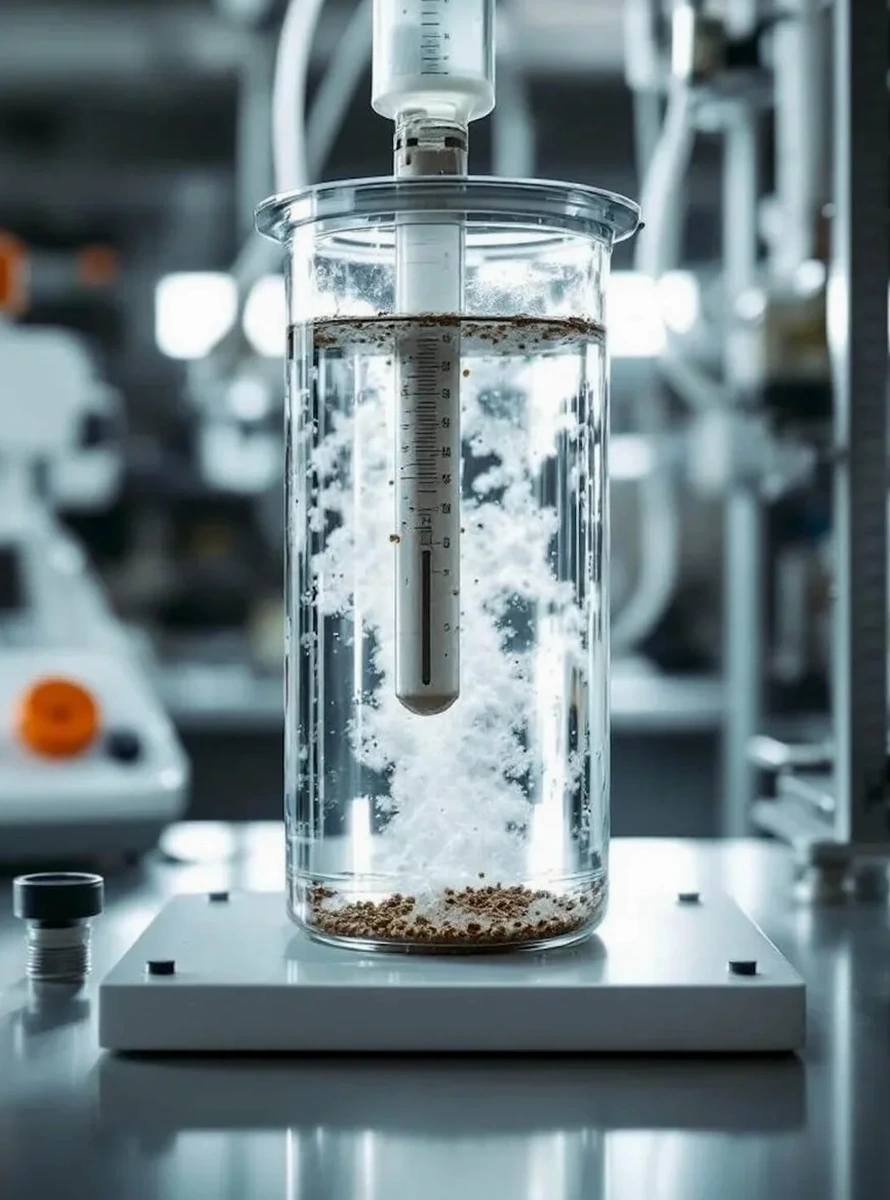
Our Hamilton lab processes grain size samples from across the Waikato, and we tailor the test sequence to the ground conditions, not a generic checklist. The services below cover the full workflow from sample preparation to engineering interpretation.
Combined sieve and hydrometer analysis
Full particle size distribution from 75 mm down to the clay fraction. Covers gravel, sand, silt, and clay percentages with Cu and Cc coefficients.
Wash-sieve pretreatment
Wet sieving through a 75-micron sieve to separate fines before dry sieving, critical for Hamilton silts that form hard lumps when dried.
Hydrometer sedimentation test
Stokes' law-based measurement of silt and clay fractions using calibrated hydrometers, with temperature and meniscus corrections applied.
Gradation reporting for NZGS classification
Engineering report with grain size curve, D-values, uniformity and curvature coefficients, and NZGS soil group assignment for design use.
Common questions
How much does a grain size analysis (sieve + hydrometer) cost in Hamilton?
How long does it take to get grain size results from your Hamilton lab?
A standard combined sieve plus hydrometer analysis takes three to four working days. Soils with high clay content need longer sedimentation time, which can add a day. We always confirm the timeline when the samples arrive.
Do I need a hydrometer test or just a sieve analysis for a residential foundation in Hamilton?
If the soil has more than about 12 percent passing the 75-micron sieve, a sieve-only analysis gives an incomplete picture. The hydrometer step measures the silt and clay fractions that control drainage and shrink-swell behaviour. In most Hamilton subdivisions, we recommend the full combined test from the start.