Foundations are the critical interface between any structure and the ground beneath it, transferring loads safely while accommodating the unique characteristics of the site. In Hamilton, New Zealand, the importance of robust foundation design cannot be overstated, given the city's dynamic growth and its location on the Waikato Basin. This category encompasses the full spectrum of foundation solutions, from shallow footings for residential builds to deep pile systems for large commercial and infrastructure projects. Understanding local ground conditions is essential, as Hamilton's varied geology demands a tailored approach to ensure long-term structural integrity and compliance with national standards.
Hamilton's subsurface conditions are largely shaped by the Waikato River and its tributaries, which have deposited extensive alluvial silts, sands, and peats across much of the city. Peat layers, in particular, present a significant geotechnical challenge due to their high compressibility and low bearing capacity. In areas like Rototuna and Flagstaff, thick peat deposits can exceed several metres in depth, requiring specialised foundation strategies to manage settlement. Elsewhere, the Hinuera Formation—a densely packed ignimbrite—provides excellent bearing strata but can be highly variable in depth and weathering. These contrasts mean a desktop study alone is insufficient; site-specific investigations are the bedrock of any reliable foundation design.
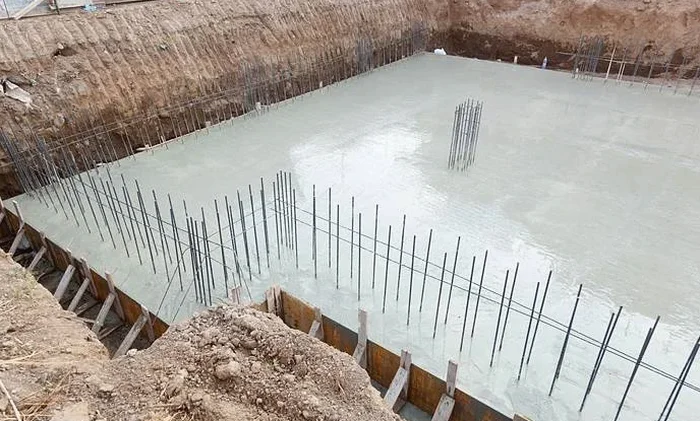
All foundation work in Hamilton must comply with the New Zealand Building Code, specifically clause B1 (Structure), which mandates that buildings withstand loads without collapsing, deforming, or degrading beyond serviceability limits. The primary verification method for geotechnical design is Acceptable Solution B1/VM4, which references the joint AS/NZS 1170 series for structural design actions and NZS 3604:2011 for timber-framed buildings on good ground. For more complex sites, particularly those with peat or liquefaction-prone soils, designs must align with MBIE's guidance on problematic ground and the New Zealand Geotechnical Society's modules on deep foundations. Hamilton City Council also enforces specific consent requirements for earthworks and foundations in flood-prone or overland flow paths, adding a layer of local regulation.
The types of projects requiring professional foundation services in Hamilton are diverse. Residential developments in greenfield suburbs like Peacocke demand cost-effective solutions such as rib-raft floors or specifically engineered pile foundation design where peat is encountered. Multi-storey commercial buildings in the CBD often rely on bored piles socketed into the Hinuera Formation to achieve high capacities without excessive settlement. Industrial warehouses in Te Rapa, with heavily loaded floor slabs, need ground improvement or deep foundations to mitigate differential settlement. Infrastructure projects, including bridge abutments along the Waikato Expressway, further illustrate the necessity of rigorous pile foundation design to resist both vertical and lateral loads in variable alluvial soils.
Available services
Common questions
What are the most common foundation problems in Hamilton's soils?
The predominant issue is excessive settlement caused by deep, compressible peat layers common in suburbs like Rototuna and Huntington. Liquefaction of loose alluvial sands during seismic events is another concern, particularly near the river. Reactive clay soils can also cause minor seasonal movement, but peat remains the primary geotechnical challenge driving the need for deep pile foundations or ground improvement.
How do New Zealand standards affect foundation depth in Hamilton?
NZS 3604:2011 defines 'good ground' for standard residential foundations, but Hamilton's peat often fails to meet this. Consequently, designs must follow B1/VM4 and AS/NZS 1170, requiring site-specific geotechnical assessment. This often results in deeper pile foundations socketed into the competent Hinuera Formation, with depths verified by a chartered professional engineer to bypass compressible near-surface soils.
What is the difference between shallow and deep foundations?
Shallow foundations, like strip footings or slabs-on-grade, transfer loads near the surface and suit sites with strong, non-compressible soils. Deep foundations, such as driven or bored piles, bypass weak strata like Hamilton's peat to bear on deeper competent layers. The choice hinges on the bearing capacity, total settlement tolerance, and the structural loads of the specific project.
When is a pile foundation necessary instead of a standard slab?
A pile foundation becomes necessary when near-surface soils lack adequate bearing capacity or are too compressible, as with the thick peat deposits across much of Hamilton. It is also required for structures sensitive to differential settlement, high-rise buildings with concentrated loads, or sites in liquefaction-prone zones where surface soils may lose strength during an earthquake.