A 15-metre cut in Hamilton East. Groundwater seeping through the faces at 3 metres depth. The contractor was working blind until we installed monitoring points. That job changed the entire construction sequence. The Waikato Basin geology doesn't mess around. Peat layers, soft alluvium, and high groundwater tables make every excavation a live experiment. Our monitoring approach catches movement before it becomes a problem. Displacement, pore pressure, vibration. We track all three. For deep basements near the river or trenching through sensitive clays, we combine inclinometer arrays with real-time piezometer readings. The data tells you when to stop digging. Not after the shoring fails. Before. This is the same methodology we apply when supporting deep excavations in the city centre and for retaining wall verification along SH1 corridors.
Monitoring doesn't prevent failure. It gives you the warning to act before the failure becomes catastrophic.
Methodology applied in Hamilton
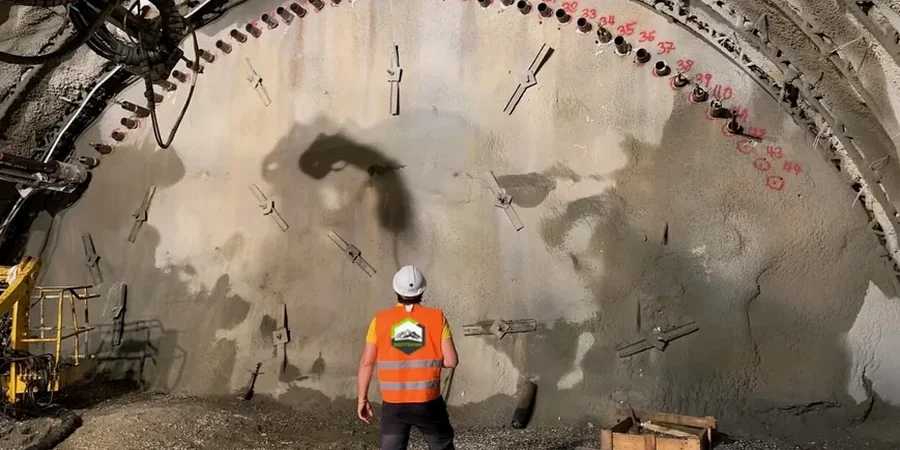
Typical technical challenges in Hamilton
The most common mistake we see in Hamilton is contractors assuming that because the top two metres are stiff clay, the rest of the cut will behave the same. It won't. As soon as you penetrate the clay crust and hit saturated alluvium, the basal stability changes completely. Without inclinometers tracking the wall profile, you won't see the rotational movement starting at the toe. By the time cracks appear at ground level behind the wall, you've already lost passive resistance. Another frequent error is ignoring pore pressure build-up behind anchored soldier piles. A single piezometer reading during installation isn't enough. You need continuous monitoring through storm events. That's when most failures initiate. The NZGS guidelines are explicit about this. Monitoring is not a checkbox. It's a feedback loop.
Our services
Our monitoring packages are built for Hamilton conditions. No generic solutions. Each installation considers the local hydrogeology and the specific construction method.
Deep excavation monitoring
Inclinometer strings, tiltmeters, and crack arrays for basement excavations up to 20 metres depth. Automated total station networks with daily deviation reports.
Piezometer and groundwater monitoring
Multi-level vibrating wire piezometer nests installed through peat and alluvium. Real-time pore pressure tracking with SMS alarm triggers.
Settlement and vibration monitoring
Liquid-level settlement arrays and triaxial geophones for adjacent building protection. Compliance with NZS 3910 notification levels.
Common questions
What monitoring is mandatory for deep excavations in Hamilton?
Under NZS 3910 and NZGS best practice, you need at minimum inclinometers behind the shoring, piezometers at multiple depths within the zone of influence, and survey prisms on adjacent structures. For cuts over 6 metres, automated systems with daily reporting are standard. We follow the observational method: monitor, assess, and adjust the temporary works design as data comes in.
How much does excavation monitoring cost in Hamilton?
How quickly can you install monitoring instruments on site?
Simple installations like crackmeters and survey targets can be operational within a day. Inclinometer casings and multi-level piezometer nests require drilling and grouting, which typically takes two to three days for a standard setup. We always coordinate with the contractor's programme to avoid delays to excavation.