A developer broke ground on a three-level commercial block near the Claudelands Bridge last year, confident the stiff pumice sands would carry the load. The first test pit at 1.8 metres hit organic silts and saturated peat lenses left by an old tributary of the river — exactly the kind of surprise that rewrites a foundation budget overnight. Hamilton sits on a patchwork of recent alluvium, peat bogs, and weathered ignimbrite, so shallow foundation design here isn't about copying a standard pad size. It's about confirming what's actually beneath the topsoil before a single load is applied. Our laboratory runs the full chain: site investigation, classification to NZGS 2005, bearing capacity calculation, and settlement analysis under serviceability limits. We also pull in CPT testing on soft-ground sites where pore pressure data matters, and we cross-check fill density with Proctor compaction when engineered backfill is part of the ground improvement plan.
A shallow foundation is only as reliable as the two metres directly beneath it — skip the ground truthing and you design on assumptions, not evidence.
Methodology applied in Hamilton
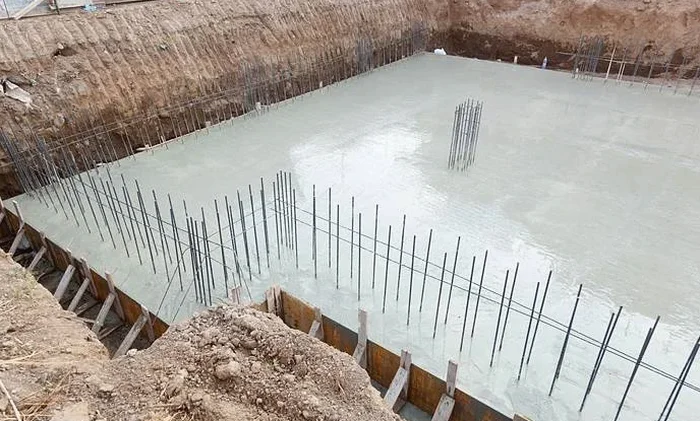
Typical technical challenges in Hamilton
The most common shortcut we see on Hamilton sites is treating the site investigation as a formality — one borehole on a 1000-square-metre footprint, no lab testing, and a bearing pressure borrowed from a previous job across town. The Waikato alluvium doesn't read the plans. A strip footing bearing on what looks like competent sandy silt can be sitting above a 400-millimetre peat pocket that wasn't caught because the hand auger stopped at refusal. Differential settlement of 15 to 25 millimetres across a timber-framed structure will crack cladding, bind doors, and trigger an insurance claim that costs more than the entire geotechnical scope. For lightweight industrial sheds on the northern fringe of the city, we often recommend a targeted test pit programme — two or three pits logged by a geotechnical engineer — rather than assuming the pumiceous soils are uniform. The field bill is modest; the repair bill for an under-designed footing isn't.
Our services
Every shallow foundation design we deliver for Hamilton projects includes the site-specific data the structural engineer actually needs. These two service blocks form the core of a reliable ground-bearing solution.
Bearing capacity and settlement analysis
We calculate ultimate and allowable bearing pressures using Mohr-Coulomb parameters from lab testing, corrected for footing geometry and groundwater position. Settlement is estimated under both immediate and consolidation conditions so the structural designer can set tolerable differential movement limits.
Site investigation and soil profiling
A combination of test pits, Scala penetrometer soundings, and selective SPT drilling builds a three-dimensional picture of the founding stratum. Samples go through particle size distribution, Atterberg limits, and moisture content determination to assign the correct NZGS group symbol and strength envelope.
Common questions
How much does shallow foundation design cost for a typical Hamilton residential site?
Do Hamilton soils need liquefaction assessment for shallow footings?
Yes, if the site is mapped within the Liquefaction Vulnerability Category on the Waikato Regional Council GIS. The NZGS Module 4 guideline requires screening the top six metres for loose saturated sands and low-plasticity silts. A clean screening often allows a standard strip footing; a marginal result may trigger ground improvement or a stiffened raft.
What's the difference between allowable bearing pressure and ultimate bearing capacity?
Ultimate bearing capacity is the theoretical pressure at which the soil fails in shear. Allowable bearing pressure is that ultimate value divided by a factor of safety — typically 2.5 to 3.0 for static loads in Hamilton — and further reduced if settlement under working loads would exceed the structure's tolerance. We report both values with the assumptions clearly stated so the engineer can check serviceability and strength independently.