Underground excavations form the backbone of modern infrastructure in Hamilton, a city experiencing rapid urban growth and increasing demands on its subsurface space. This category encompasses the full lifecycle of creating voids below ground level, from initial site investigation and geotechnical design through to construction and long-term monitoring. In Hamilton's context, these are not merely construction activities; they are complex geotechnical undertakings that must account for the city's challenging ground conditions. The importance of specialized underground excavation knowledge here cannot be overstated, as it directly impacts the safety, cost, and feasibility of projects ranging from deep sewer diversions to building basements in the central business district.
Hamilton's geology presents a unique and demanding environment for any underground work. The city is predominantly underlain by the Hamilton Ash Formation, a sequence of volcanic ash-derived soils that are highly variable in strength and sensitivity. These soils can transition rapidly from stiff, brittle materials to weak, erodible silts. Most critically, much of the city sits on the margins of ancient peat bogs, where thick deposits of highly compressible and exceptionally soft organic soils are encountered. This combination creates a two-fold challenge for geotechnical analysis for soft soil tunnels: managing the instability of the ash layers and controlling large, long-term settlements in the peat. Groundwater is typically high, further complicating any excavation by reducing effective stress and creating the potential for base heave or running ground conditions.
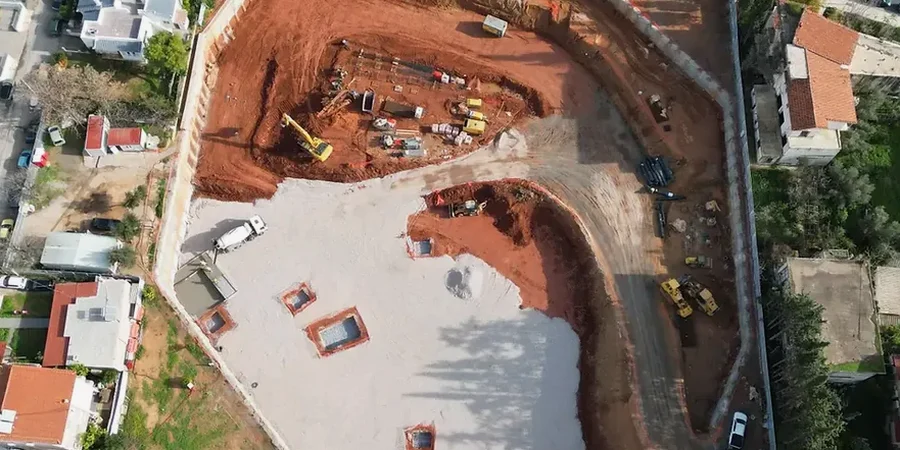
All underground excavation projects in New Zealand are governed by a robust regulatory framework to ensure public safety and environmental protection. The cornerstone is the Health and Safety at Work Act 2015, which places a primary duty of care on all parties to eliminate or minimize risks. This is supported by specific good practice guidelines, most notably WorkSafe's 'Good Practice Guide for Trenching and Shoring' and the New Zealand Geotechnical Society's guidelines for site investigation and deep excavations. Compliance with the New Zealand Building Code, particularly Clause B1 'Structure', is mandatory, requiring that all excavations and their support systems are designed to withstand expected loads without collapse or excessive deformation. A geotechnical design of deep excavations must be meticulously documented and submitted for building consent, demonstrating a clear understanding of gravity and lateral earth pressures, surcharge loads, and seismic actions in accordance with NZS 1170.5.
The range of projects that necessitate these specialized services in Hamilton is broad and vital to the city's function. Critical infrastructure upgrades, such as the Hamilton City Council's long-term plan for wastewater and stormwater network separation, require deep, braced excavations and microtunnelling through variable ground. The push for urban intensification sees multi-storey buildings with deep basements in the CBD, requiring robust temporary works and a thorough geotechnical excavation monitoring regime to protect adjacent heritage structures. Transportation projects, including underpasses and service culverts beneath the Waikato Expressway, demand a forensic understanding of soil-structure interaction to prevent damage to the arterial route. Each of these project types relies on a precise synthesis of ground investigation data, advanced numerical modelling, and practical construction experience to succeed.
Common questions
What are the main geotechnical risks when excavating in Hamilton's soil conditions?
The primary risks stem from the highly compressible peat and sensitive volcanic ash soils. These can lead to rapid instability of unsupported trench faces, base heave from groundwater pressure, and significant ground settlement that can damage adjacent roads and buildings. Managing groundwater inflow and preventing the softening of exposed soils are critical control measures on any site.
What New Zealand standards and regulations apply to designing a deep excavation support system?
The design must comply with the New Zealand Building Code Clause B1 for structural stability. Key documents include WorkSafe's Good Practice Guide for Trenching and Shoring, the NZ Geotechnical Society's guidelines, and AS/NZS 1170 for structural design actions, including seismic loads. A Chartered Professional Engineer must oversee the design, which is submitted for building consent.
When is geotechnical monitoring required for an underground excavation project?
Monitoring is mandatory when excavations are near sensitive structures, public roads, or when the predicted ground movements could compromise safety or serviceability. It is a fundamental part of the Observational Method, allowing engineers to verify design assumptions by tracking real-time data on ground settlement, lateral wall deflection, and groundwater levels to trigger contingency measures if needed.
What is the difference between a trench and a deep excavation in geotechnical terms?
While 'trench' typically refers to a narrow, linear excavation often for pipelines, a 'deep excavation' is generally defined as one exceeding 4.5 meters in depth or where the excavation walls interact with significant surrounding loads. The design complexity increases substantially for deep excavations, requiring detailed analysis of multi-level strutting, soil arching, and overall basal stability.