In Hamilton, the management of slopes and retaining walls is a critical aspect of geotechnical engineering, driven by the city's unique topography and the ongoing pressures of urban development. This category encompasses a suite of specialized services aimed at ensuring the stability of natural and man-made earth structures, protecting both property and lives from the risks of land movement. Whether it's a steep section in a residential subdivision, a deep excavation for a commercial building, or a vital transport corridor, our work provides the essential analysis and design needed to create safe, durable, and compliant earth retention solutions. The core services include advanced slope stability analysis to assess failure risks, the design of robust retaining wall design structures to hold back soil, and ground anchorage systems for situations requiring high-capacity restraint.
The geological setting of the Waikato region presents specific challenges that make professional slope and wall engineering non-negotiable. Much of Hamilton is underlain by the Hinuera Formation, a complex sequence of weakly cemented pumiceous sands and silts from ancient volcanic events. This material is highly susceptible to erosion, piping, and strength loss when saturated, creating a landscape prone to shallow slope failures and creep. Adding to this complexity, the city's many gullies and the banks of the Waikato River feature deep, soft alluvial deposits. Understanding these local soil behaviors is fundamental to our designs, as standard solutions often fail to account for the erosive sensitivity and variable strength of these volcanic-derived soils.
All work within this category is governed by a strict framework of New Zealand standards and local regulations to ensure long-term safety and performance. The design of earthworks and retaining structures must comply with the New Zealand Building Code, specifically Clause B1 (Structure), which is met by following Verification Method B1/VM4 and its cited standards, most notably NZS 4404:2010 for Land Development and Subdivision Infrastructure. Key design standards include AS/NZS 1170 for structural loading, NZS 1170.5 for seismic considerations, and the NZ Geotechnical Society’s guidelines for slope stability assessment. Hamilton City Council's District Plan and Engineering Code of Practice also impose specific consenting and design requirements, particularly for structures over 1.5m in height or on steep land, ensuring every project is rigorously evaluated for its geological context.
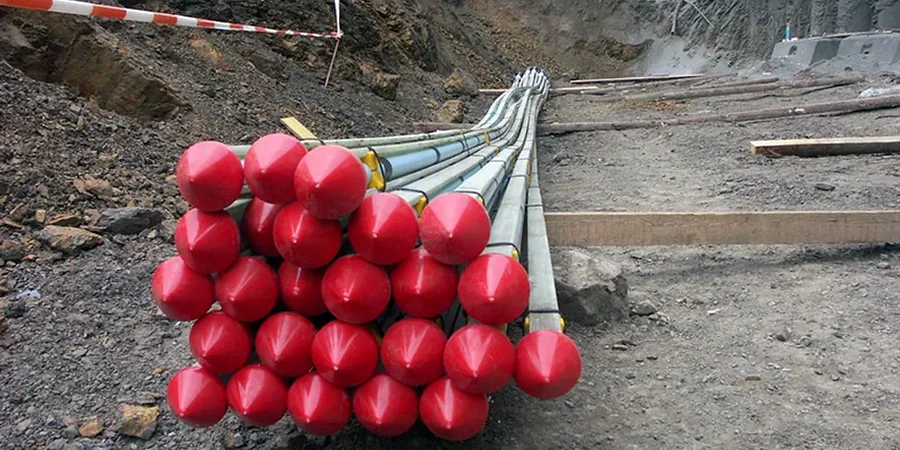
The need for these services spans a wide range of project types across Hamilton. Residential developers regularly require retaining wall design to create level building platforms on the city's undulating sections, while council infrastructure projects depend on our expertise for safe road cuttings and bridge abutments. Commercial and industrial developments often involve deep basements, demanding detailed temporary and permanent retention solutions. For projects where space is limited or loads are high, such as reinforcing an existing failing wall or stabilizing a large landslide, our active/passive anchor design service provides a technically superior and often more economical alternative. From large-scale earthworks that reshape the landscape to the stabilization of a single residential backyard, a tailored geotechnical approach is the common thread that prevents costly failures and ensures regulatory approval.
Common questions
What are the signs that my Hamilton property might need a slope stability assessment?
Key indicators include tilting trees or fences, tension cracks opening in the ground, bulging or leaning retaining walls, and unusual boggy areas on a slope that suggest groundwater issues. In Hamilton's pumice-rich soils, signs of small-scale erosion or 'piping' are also a serious red flag that the internal structure of the slope is being compromised and requires professional evaluation.
Do I always need a building consent for a retaining wall in Hamilton?
Under the New Zealand Building Code, a building consent is typically required for retaining walls that retain more than 1.5 meters of ground, or any height when supporting a surcharge like a driveway or building. However, Hamilton City Council's District Plan rules may also require resource consent for earthworks or structures near boundaries, regardless of height, making early advice essential.
How does the local geology in Hamilton influence the choice of a retaining wall system?
The weakly cemented Hinuera Formation soils are highly susceptible to water-induced erosion and strength loss. This makes drainage design just as critical as structural design. Gravity walls like cantilevered poles are common, but their design must carefully account for low passive resistance and potential scour. In many cases, ground anchors are a superior solution to avoid deep excavations in this sensitive material.
What is the difference between an active and a passive ground anchor?
An active anchor is tensioned against the structure during installation, immediately applying a pre-determined load to prevent any soil movement. A passive anchor is not tensioned upon installation; it only develops its resistive force if the ground starts to move and load the anchor. Active anchors are typically used where movement must be strictly controlled, such as supporting an existing building.