Hamilton sits squarely on the floodplain of the Waikato River, where subsurface conditions shift from loose alluvial silts and sands to thick, compressible peat layers, particularly in suburbs like Rototuna and Flagstaff. These deposits, part of the Hinuera Formation, can extend past 15 metres before reaching competent bearing strata. In our laboratory, we have examined core samples from across the city where organic content exceeds 20 percent in near-surface layers. For projects on these challenging profiles, a conventional footing simply does not cut it; the load must bypass the weak material entirely. We routinely combine deep boring data with in-situ permeability testing to characterise drainage behaviour, which directly influences pile shaft friction calculations and long-term settlement predictions under the NZGS Module 4 framework.
Peat in Hamilton's northern suburbs requires pile toe depths often exceeding 12 metres just to find sufficient end bearing in the underlying pumice sands.
Methodology applied in Hamilton
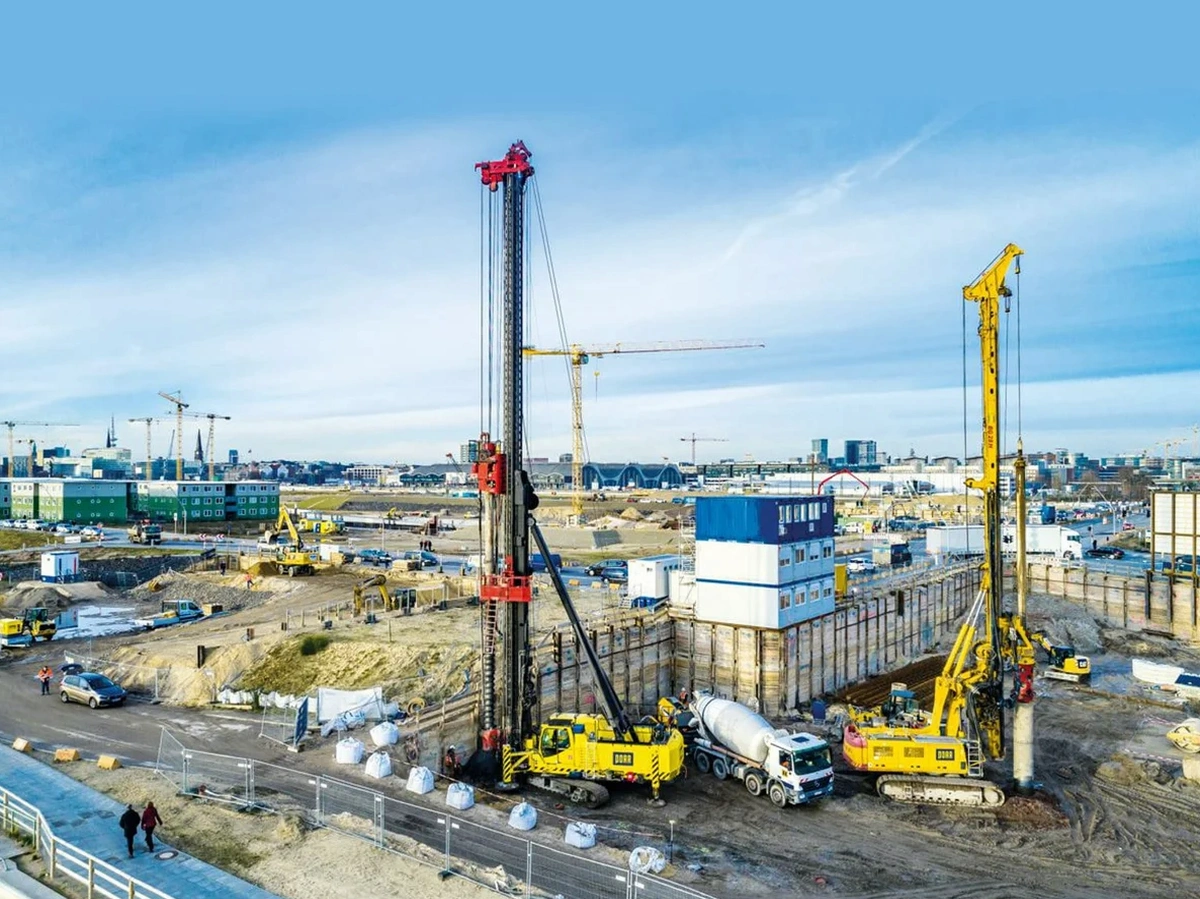
Typical technical challenges in Hamilton
NZS 3404 Steel Structures Standard and the NZGS guideline on deep foundations form the backbone of our design checks. In Hamilton, the risk landscape is dominated by negative skin friction. When a pile is driven through peat and the surrounding ground settles more than the pile itself, the drag load can exceed the structural capacity of the steel section. We have pulled pile monitoring data from a warehouse project in Te Rapa where downdrag added nearly 40 percent to the axial load over two years. Bypassing a detailed settlement analysis—or assuming the peat layer is thin when it actually thickens unexpectedly—leads to cracked floor slabs and misaligned racking systems. The seismic hazard from the Hamilton Basin is moderate, but the deep soil column amplifies ground motion significantly; a site-specific response spectrum derived from MASW testing is not optional, it is the only way to calibrate the kinematic pile response during a Waikato fault rupture scenario.
Our services
The pile design workflow we apply to Hamilton projects is structured around the specific sequence of soil layers encountered in the Waikato basin. Our approach moves from subsurface investigation to structural sizing and finally to verification testing.
Geotechnical investigation and pile load test interpretation
We execute the full site investigation programme—including SPT, CPTu, and undisturbed sampling—and interpret the data to generate design soil profiles. Static load test results are back-analysed using the Chin-Kondner method to calibrate the unit shaft friction and end bearing for production piles.
Structural design and pile group analysis
Using the derived geotechnical parameters, we size the steel sections and reinforcement cages for axial, lateral, and seismic loads. Group efficiency is calculated considering the pile spacing and the compressibility of the peat interlayer, and we prepare the full piling schedule and specification for the contractor.
Common questions
How deep do piles typically need to go in Hamilton's peat soils?
In our experience across Hamilton, piles usually need to reach depths between 10 and 18 metres. The exact depth depends on the thickness of the peat and the level of the competent bearing layer—generally the pumice sands of the Hinuera Formation or the weathered greywacke bedrock. We finalise the depth only after drilling and logging at least one borehole per 300 square metres of building footprint.
What is the cost range for a pile foundation design in Hamilton?
Does the Waikato River level affect pile design?
Yes, the river exerts a strong influence on the groundwater table across the Hamilton basin. A high river stage saturates the alluvial sands and reduces effective stress, which lowers shaft friction. We always design for the highest anticipated water table and check the pile's structural capacity for buoyancy effects during flood events.
What pile types work best in the Hamilton Basin?
Driven steel H-piles and screw piles are the most common solutions. H-piles can be driven through dense pumice sands and offer excellent penetration, while screw piles provide immediate load capacity and reduce vibration. We avoid bored cast-in-place piles in the deepest peat unless temporary casing is used to prevent necking.
How long does the pile design process take from start to finish?
From the moment we mobilise the drilling rig to delivering the signed design report, the typical timeline is four to six weeks. The field investigation takes three to five days, the laboratory testing runs for ten working days, and the analysis and design documentation require another two weeks. Peer review by the council can add an additional week.