Ground improvement encompasses a suite of geotechnical engineering techniques designed to enhance the physical and mechanical properties of soil and rock masses, transforming marginal or unsuitable ground into a reliable foundation medium. In Hamilton, this discipline is not merely a technical option but often a necessity, driven by the city's rapid urban expansion and the inherent variability of its subsurface conditions. From residential subdivisions in Rototuna to commercial developments in the Te Rapa industrial precinct, the ability to safely and economically build on weak soils is paramount. The category covers a range of methods, including dynamic compaction, rigid inclusions, and specifically the design and implementation of stone column design and vibrocompaction design, each selected based on site-specific ground models and structural loading requirements. Ultimately, the goal is to mitigate risks associated with excessive settlement, bearing capacity failure, and liquefaction, ensuring the long-term performance and resilience of infrastructure assets.
The Waikato Basin, upon which Hamilton is situated, presents a complex geological legacy that directly underpins the critical need for ground improvement. Much of the city is underlain by Quaternary alluvial deposits, predominantly the Hinuera Formation, comprising interbedded sands, silts, and gravels with highly variable density and cementation. These materials are often capped by or interlayered with significant thicknesses of peat and soft, compressible organic silts, particularly prevalent in low-lying areas near the Waikato River and its historic floodplains. The ground profile is notorious for its heterogeneity over short distances, with dense gravels abruptly transitioning to soft, normally consolidated clays. This geological lottery means a standard shallow foundation is frequently infeasible, demanding a rigorous site investigation and a tailored ground improvement strategy to avoid differential settlement that could crack slabs and damage services.
The practice of ground improvement in New Zealand is governed by a robust framework of standards and guidelines that ensure design reliability and construction quality. The primary normative documents are the New Zealand Building Code, specifically Clause B1/VM1 (Structure) and B1/VM4 (Foundations), which mandate that foundations be designed to sustain loads without undergoing settlement detrimental to the structure. In practice, this directs engineers to NZS 3604:2011 for simple residential timber-framed buildings on 'good ground', but for the problematic soils common in Hamilton, this standard is often exceeded. The design of more complex improvement schemes relies heavily on NZGS Guideline documents, such as the 'Guideline for the Design of Ground Improvement' and the 'Module on Liquefaction', which align with international standards like Eurocode 7 (EN 1997-2) for ground investigation and testing. Verification testing, typically through Cone Penetration Tests (CPT) or Plate Load Tests, is a non-negotiable contractual requirement to validate that specified performance criteria have been met.
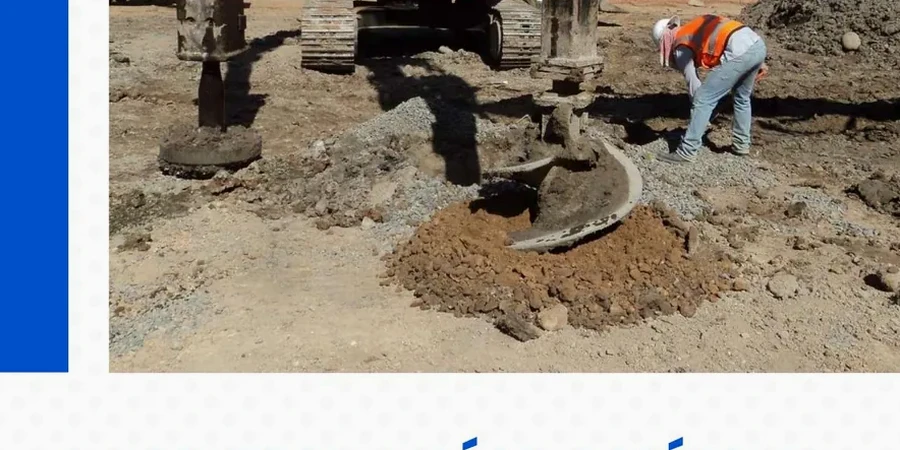
The types of projects in Hamilton requiring ground improvement are diverse, reflecting the city's growth. Large-format retail buildings and warehouses on the city's fringes, where peat deposits are thick, routinely rely on stone column design to transfer loads through the compressible layer to a stiffer bearing stratum, simultaneously accelerating consolidation settlement. Infrastructure projects, such as stormwater detention basins and road embankments over soft ground, often utilize basal geogrid reinforcement combined with staged construction to manage stability. In areas with loose, water-saturated sands, such as those identified in liquefaction susceptibility maps, vibrocompaction design becomes a critical mitigation tool to densify the soil profile and enhance cyclic resistance. Multi-storey residential apartments near the central city, where settlement tolerance is minimal, increasingly employ rigid inclusion systems to provide a stiff, settlement-reducing platform beneath raft foundations. Each project demands a bespoke solution, integrating geotechnical assessment with structural needs and construction sequencing.
Available services
Common questions
What is ground improvement and when is it necessary for a site in Hamilton?
Ground improvement refers to the controlled modification of in-situ soils to increase their strength, reduce compressibility, or mitigate liquefaction potential. In Hamilton, it becomes necessary when site investigations reveal problematic ground like deep peat, soft silts, or loose sands that cannot safely support proposed structures using standard shallow foundations without risking excessive total or differential settlement.
How do I know if my Hamilton section requires a ground improvement solution rather than a standard foundation?
The determination is made through a geotechnical investigation, typically involving Cone Penetration Tests (CPTs) and boreholes. If the results fall outside the 'good ground' criteria defined in NZS 3604:2011—for example, encountering more than a thin layer of soft organic material or very loose sand—a specific ground improvement design will be required to meet the New Zealand Building Code performance requirements.
What are the primary methods of ground improvement used for managing soft and compressible soils in the Waikato region?
Common techniques include stone columns, which create stiff drainage paths to accelerate consolidation and improve composite shear strength, and rigid inclusions for stringent settlement control. For granular soils, vibrocompaction is effective. The choice depends on the soil profile, with peat often requiring load-transfer platforms or preloading combined with vertical drains.
What New Zealand standards govern the design and verification of ground improvement works?
Design is governed by the New Zealand Building Code Clause B1, with guidance from NZGS modules and international standards like Eurocode 7. Verification is critical and is typically performed using post-treatment in-situ testing, such as CPTs or plate load tests, to confirm that the treated ground achieves the specified design parameters for bearing capacity and settlement.